
FLNG and Onshore LNG in Mozambique: Why a 50–50 Hybrid Strategy Would Have Been the Prudent Choice from Day One
In the global offshore energy industry, few development models have delivered results as consistently and efficiently as ExxonMobil’s serial FPSO deployment strategy in Guyana. In the Stabroek Block, Exxon accelerated production by bringing one FPSO online almost every year—starting with Liza Destiny in 2019, followed by Liza Unity in 2022, Prosperity in 2023, and ONE GUYANA in 2025.
Each unit was larger and more advanced than the previous one, forming a standardized, modular ramp‑up that pushed Guyana’s offshore production capacity past 900,000 barrels/day in less than five years.
This disciplined “assembly‑line” offshore strategy—fast, modular, repeatable, and low‑risk—helped Guyana unlock its discoveries at remarkable speed.
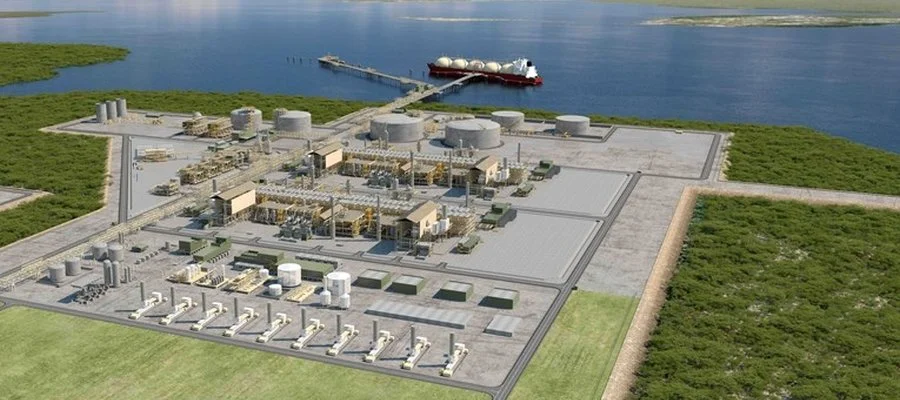
Yet the same strategy was not applied to the massive gas discoveries in Mozambique. Despite similar deepwater success offshore, project development was based on large, land‑based LNG complex in Afungi—an area far more remote, infrastructure‑poor, and politically fragile. As a result, while Guyana thrived under a floating‑first approach, Mozambique’s LNG ambitions became trapped in a decade of delays.
This contrast offers a vital lesson: in frontier regions with geographic or political risks, offshore floaters (FLNG/FPSO) often represent the most prudent initial development pathway.
Source: Engineers Australia
2010–2014: Giant gas discoveries that should have transformed Mozambique
Mozambique’s modern LNG chapter began with several world‑class discoveries:
In Area 1, Anadarko (later TotalEnergies) confirmed over 60 Tcf of recoverable gas between 2010–2014.
In Area 4, Eni found massive accumulations in the Coral, Mamba Complex, and Agulha reservoirs between 2011–2014, totaling ~85 Tcf.
These results positioned Mozambique among the world’s largest undeveloped gas provinces, justifying ambitious plans:
Area 1 LNG onshore plant → 12.8–13.1 mtpa.
Area 4 LNG plant → 18 mtpa modular e‑LNG concept.
Combined: ~31 mtpa of potential liquefaction capacity.
But while Guyana moved from discovery (2015) to first oil (2019) in just four years using FPSOs, Mozambique’s onshore LNG journey stalled almost immediately.
More than a decade of delays: why Afungi never delivered
The Afungi Peninsula was selected as the onshore LNG hub, but the site presented challenges from the start:
It is extremely remote, requiring the construction of roads, an airport, resettlement villages, and extensive logistics infrastructure.
Security conditions deteriorated sharply, leading TotalEnergies to declare force majeure in 2021, halting all work on one onshore LNG plant project and FID on the second.
Thus, from the first discoveries (2010–2014) up to 2026, not a single onshore train reached production.
In contrast, offshore FLNG advanced smoothly.
Offshore success: Coral Sul and Coral Norte demonstrate the viability of a floating‑first model
Coral Sul FLNG began LNG production in 2022, shipping over 135 cargoes.
Coral Norte FLNG, with 3.6 MTPA capacity, was launched in January 2026 and is on track for 2028 start‑up.
The new vessel incorporates over 1,000 lessons learned from its predecessor, improving efficiency and reducing execution risk.
These offshore successes underline that Mozambique can execute world‑class offshore LNG—but only when the development is kept offshore and away from Afungi’s complexities.
A 50–50 hybrid strategy: FLNG for early value, onshore for long‑term scale
Given the realities of the Rovuma Basin, a rational and resilient development plan would have been:
50% FLNG (≈15.5 MTPA)
50% onshore LNG (≈15.5 MTPA), but delayed until security stabilizes
FLNG production timeline (hypothetical) using 3.6 MTPA per unit (as per Coral Norte design):
2022: 3.6 mtpa
2023: 7.2 mtpa
2024: 10.8 mtpa
2025: 14.4 mtpa
2026: 18.0 mtpa
Each unit provides 3.6 MTPA, more than sufficient to cover half of the total resource base by 2026, for a production of around 50 million tons of LNG for the period 2022-2026.
By contrast, onshore development would contribute 0 tons of LNG in 2022–2026 due to force majeure and pre‑FID status.
Conclusion: In remote or unstable regions, floaters are the superior first step
Mozambique’s experience now mirrors a global truth:
· FLNG avoids dependence on land‑based infrastructure
· It isolates the project from insurgency‑prone areas
· It scales modularly, one unit at a time
· It converts discoveries into production far earlier than onshore megaprojects
Built in safe, controlled shipyards
Had Mozambique adopted a floating‑first development plan—much like Guyana’s FPSO approach—it could have unlocked dozens of MTPA, minimized exposure to land‑based risks, and still built toward long‑term onshore scale once conditions allowed.
In frontier basins, prudence beats scale.
And when geography or politics are uncertain, floaters are not just an option—they are the superior strategic choice.
References (APA Style)
African Development Bank. (2020). Mozambique LNG Area 1 – Project Summary. https://mapafrica.afdb.org [jpt.spe.org]
Eni. (2022). Coral Sul FLNG – Mozambique. https://www.eni.com/en-IT/actions/global-activities/mozambique/coral-south.html [nsenergybusiness.com]
Eni. (2026, January 16). Coral North FLNG Hull Launch Press Release. https://www.eni.com [finance.yahoo.com]
ExxonMobil. (2024). Guyana project overview. https://corporate.exxonmobil.com/locations/guyana/operations/guyana-project-overview [cmegroup.com]
ExxonMobil. (2024). Area 4 enters FEED phase for Rovuma LNG. https://corporate.exxonmobil.com/locations/mozambique/mozambique-newsroom/area-4-concessionaires-enter-feed-stage-for-rovuma-lng-project [oilnow.gy]
Guyana Times. (2024). ExxonMobil now owns all 3 FPSOs operating in Stabroek Block. https://guyanatimesgy.com/exxonmobil-now-owns-all-3-fpsos-operating-in-stabroek-block/ [oilpriceapi.com]
Investing.com. (2025–2026). JKM LNG Price Historical Data. https://www.investing.com [worldports.org]
JOGMEC. (2026). Weekly Trend of Natural Gas and LNG Prices. https://oilgas-info.jogmec.go.jp [oilfieldaf...review.com]
OilNOW. (2025). Guyana’s four FPSOs set a new pace for deep-water oil development. https://oilnow.gy/featured/guyanas-four-fpsos-set-a-new-pace-for-deep-water-oil-development/ [offshore-mag.com]
S&P Global Platts. (n.d.). JKM LNG Price Assessment Methodology. https://www.spglobal.com [mapafrica.afdb.org]
Upstream. (2025, August 8). ExxonMobil kicks off production from ONE GUYANA FPSO. https://www.upstreamonline.com/production/exxonmobil-kicks-off-production-from-one-guyana-fpso/2-1-1855551 [eni.com]
TotalEnergies / Mozambique Expert. (2025). Mozambique LNG Project Overview. https://www.mozambiqueexpert.com [xrg.com]
