
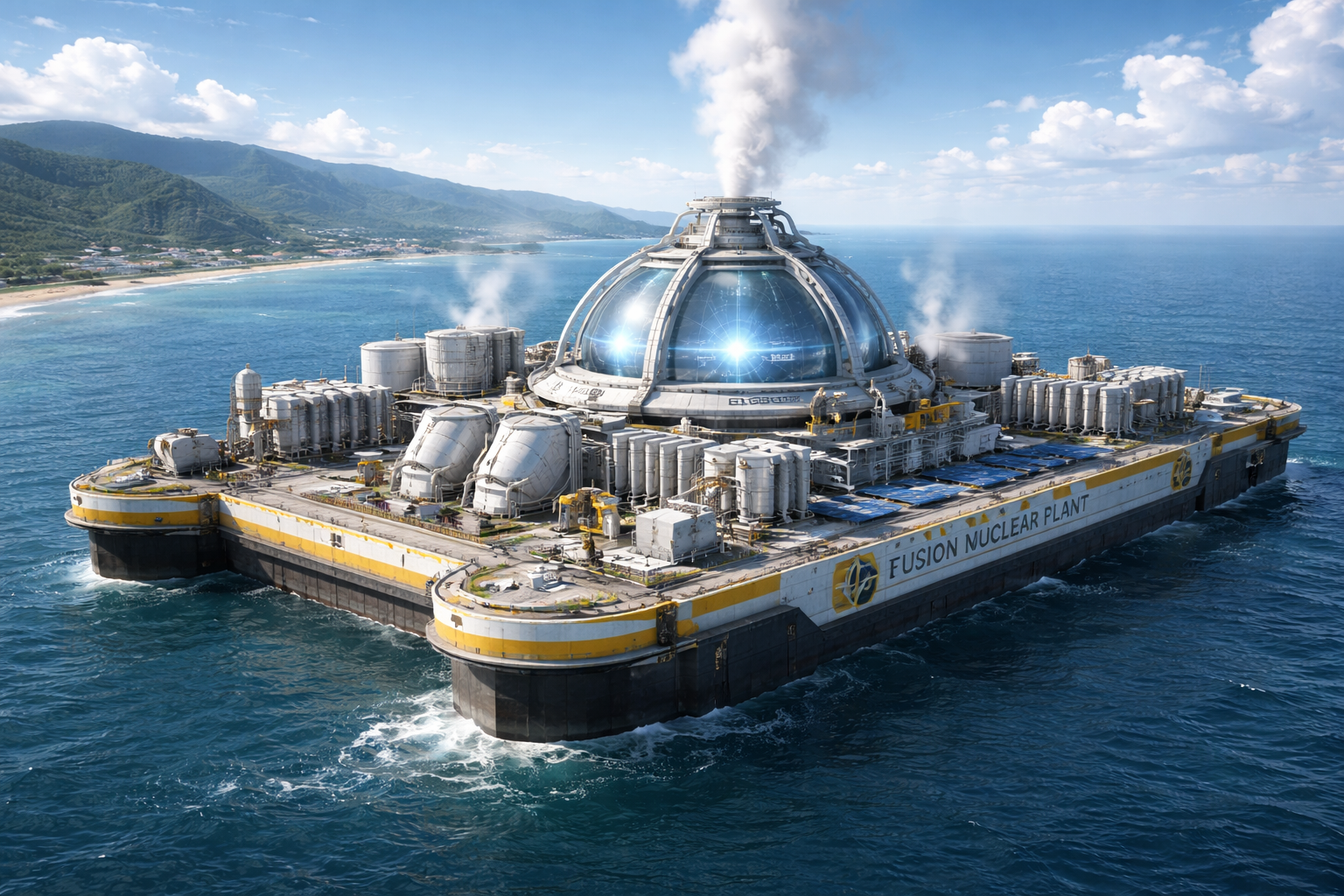
Floating Fusion Power: Feasibility of a 400 MWe Fusion Barge
Nuclear fusion is usually imagined as a massive land-based facility.
But what if the first commercial fusion plants were built… at sea?
The offshore industry has already demonstrated that extremely complex energy systems can be installed on floating structures — from FPSOs to floating LNG plants weighing hundreds of thousands of tons.
So a natural question emerges: Could fusion reactors also be deployed offshore?
In a new article on Floaters Intelligentia, we explore the conceptual feasibility of a 400 MWe floating fusion power barge.
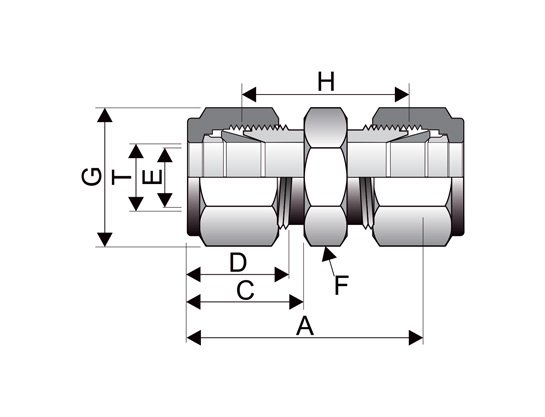
High-Pressure Small Bore Tubing in FPSO and FLNG Facilities Application Context, Standards Alignment, and Execution Control
High-pressure Small Bore Tubing in FPSO & FLNG Facilities
Application Context, Standards Alignment, and Execution Control
In floating production projects, welding piping remains the structural backbone of hydrocarbon processing, supporting by decades of engineering practice under frameworks such as ASME B31.3.
But small bore high-pressure tubing systems are not secondary of informal solutions.
When applied within its intended service envelope, tubing can add value:
· Eliminate field welding within its scope
· Reduce hot-work exposure offshore
· Improve installation flexibility during modular integration
· Support late-stage hook-ups and commissioning activities
In offshore projects, the real conversation is not tubing vs piping. It is selecting the right system for the right service and executing it correctly.
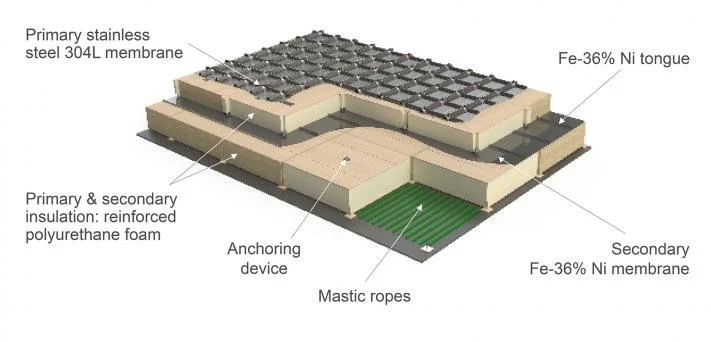
GTT NEXT1: The New Benchmark in LNG Containment Technology
🔥 NEW on Floaters Intelligentia: GTT NEXT1 Changes the Game
GTT’s NEXT1 containment system—now approved by Bureau Veritas and Lloyd’s Register—delivers Mark III Flex+‑level thermal performance (~0.07% BOR) thanks to its dual‑metallic membrane and reinforced PU foam insulation.
Compared to the classic Mark III system used on major FLNGs, which operates around 0.15% BOR, NEXT1 cuts boil‑off nearly in half—a major gain for efficiency and offshore reliability.
In our new deep dive, we also explain why Mark III became more widespread than NO96, despite NO96’s robust metal‑metal design.
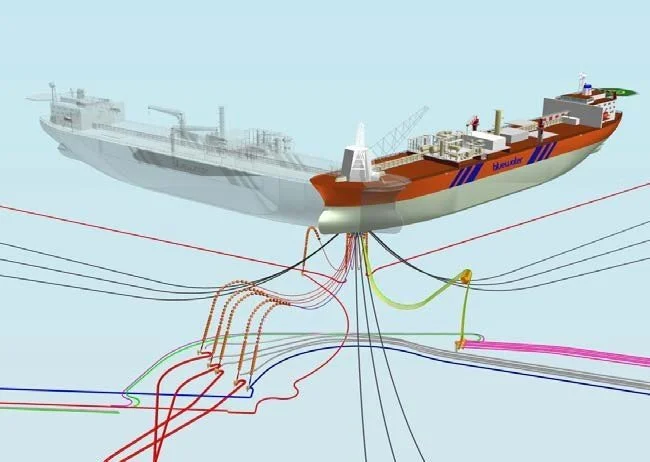
Mooring System Evolution in FPSO and FLNG Units (2015–2025)
🔗 Mooring System Evolution in FPSO and FLNG Units (2015–2025)
Over the past decade, the offshore industry has witnessed a clear divergence in mooring strategies between FPSOs and FLNGs:
⚓ FPSOs are increasingly adopting spread mooring systems, driven by cost efficiency, design simplicity, and operational flexibility.
🌀 FLNGs, on the other hand, continue to rely on turret and yoke-based systems to meet the stringent requirements of cryogenic LNG transfer in side-by-side offloading configurations.
📌 This article explores:
The operational implications of heading control
Key differences between internal/external turrets, SYMS, and SSYMS
Real-world examples: PFLNG SATU, Coral Sul FLNG, Golar Hilli
👉 A valuable read for professionals involved in complex offshore developments, where mooring system selection directly impacts safety, efficiency, and project economics.
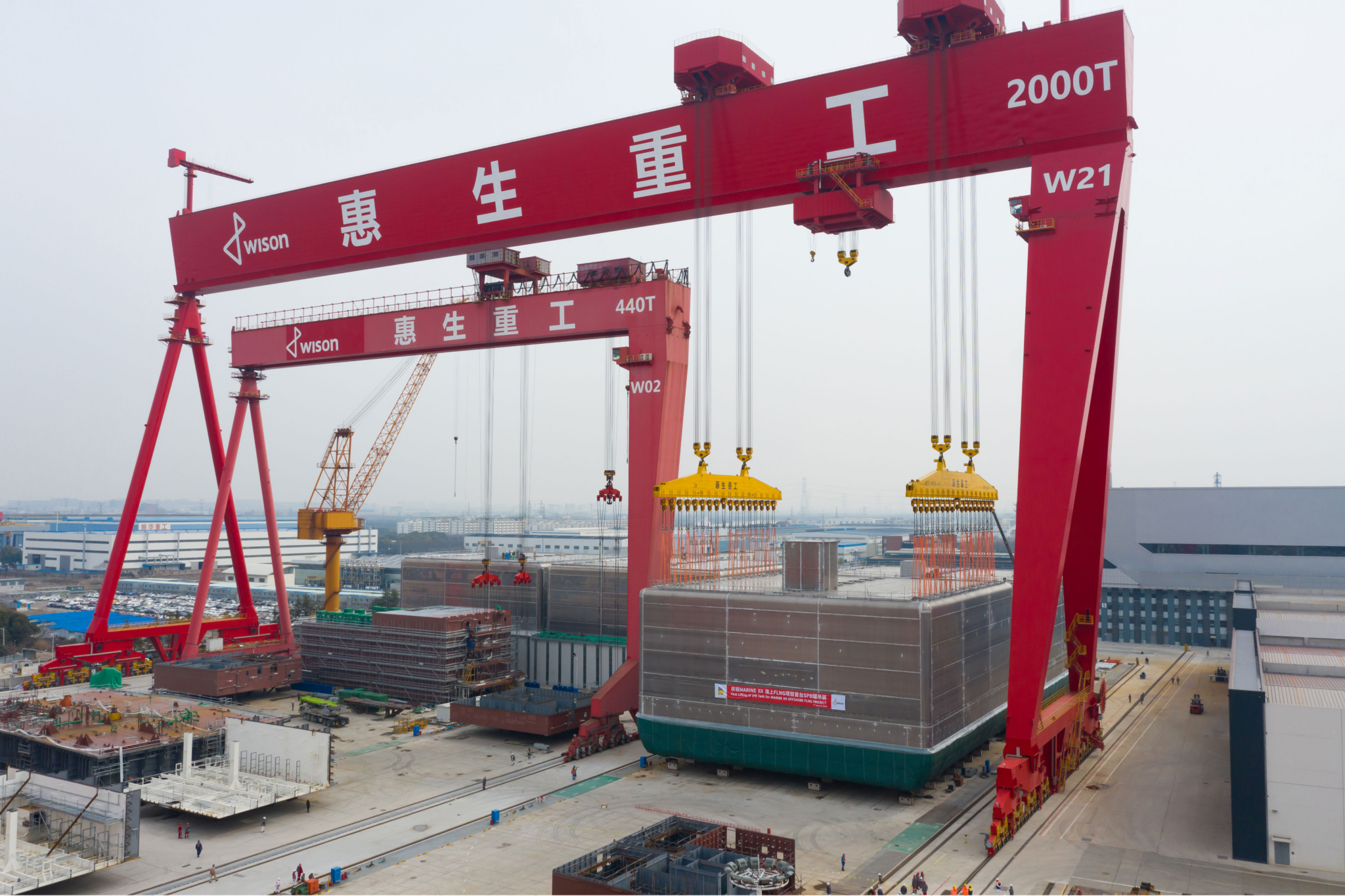
LNG Containment Technologies in FLNG: Comparing GTT, SPB, and MOSS Tanks
🚢 LNG Containment Systems in FLNG: GTT vs SPB vs MOSS (UPDATED FEBRUARY 2026)
As FLNG projects scale globally, the choice of LNG containment technology has become one of the most strategic decisions in project design, EPC execution, and lifecycle performance.
Floaters Intelligentia has just published a fully updated comparison of the three dominant tank technologies used in FLNG units:
🔹 GTT Mark III membrane systems
🔹 SPB (Self‑Supporting Prismatic Type B)
🔹 MOSS spherical tanks
The article examines how each technology impacts:
✅ Construction sequence & yard strategy
✅ Thermal and structural performance
✅ Sloshing resistance and operational envelope
✅ CAPEX, schedule risk, and maintainability
✅ Suitability for newbuild vs conversion FLNG units
Key insights:
✨ GTT membrane systems remain the benchmark for newbuild FLNG thanks to high shape efficiency and parallelized installation (hull completion followed by in‑hold panel installation), supported by a mature global yard ecosystem.
✨ SPB tanks—pioneered by IHI and now featured on Wison’s Nguya FLNG for Eni—demonstrate fast‑track potential at the module level when tanks are fabricated off‑hull and integrated as a package. However, SPB installation sits on the dry‑dock critical path and requires heavy lifts, so the overall schedule advantage depends on yard capability and execution readiness.
✨ MOSS tanks continue to play a vital role in FLNG conversions (e.g., Gimi), offering outstanding sloshing resistance but lower volumetric efficiency, which makes them less common in newbuild FLNG.
This updated piece includes:
📌 A revised technical comparison table
📌 A detailed construction & integration section
📌 Thermal management analysis (cofferdams vs void systems)
📌 A full set of APA‑formatted references
📌 Updated field examples from Prelude, Coral Sul, Coral Norte, PFLNGs, GTA Gimi, Nguya, and Genting FLNG
🔍 If you work in FLNG development, EPC execution, naval architecture, or LNG operations, you’ll find practical insights drawn directly from real projects and shipyard practices.