
Wison and Shell Team Up on DMR Technology: A Surprise Shift for the FLNG Market?
In a move that few industry observers would have predicted, Wison New Energies has signed a collaboration agreement with Shell to integrate Shell's Dual Mixed Refrigerant (DMR) liquefaction technology into future FLNG developments. According to the announcement, Shell will support Wison during pre-FEED, FEED and EPC phases while also providing process performance guarantees for the technology.
At first glance, the agreement may look like another technology licensing deal. However, for those familiar with the evolution of offshore liquefaction technology, it could signal a significant shift in the future direction of the FLNG market.
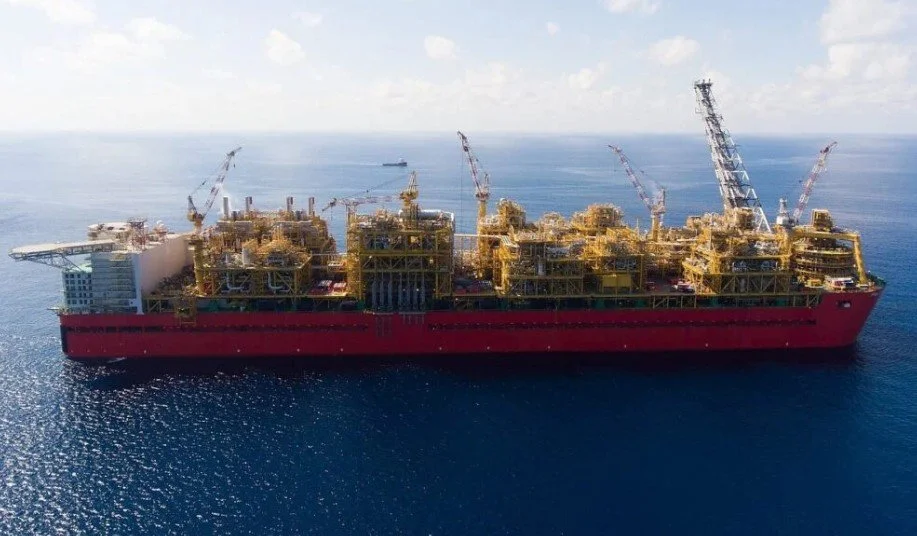
Historically, DMR has been closely associated with Shell's LNG developments, most notably the Prelude FLNG, which remains the largest FLNG facility ever built. Until now, the technology had largely been restricted to Shell-equity projects and had not been openly offered to the broader FLNG market. Wison's announcement therefore represents the first major effort to commercialize Shell's DMR technology for third-party FLNG developers.
This is particularly surprising because recent FLNG projects have generally moved in a different direction.
At this link you can find our previous article on the comparison between LNG cycles in FLNG.
Source: Wison New Energies
The Rise of SMR in Modern FLNG Design
Over the last decade, Single Mixed Refrigerant (SMR) technology has become the preferred liquefaction process for many small and medium-scale FLNG developments. If you are interested in this topic, have a look at our previous article on FLNG liquefactions technology.
The reason is straightforward: offshore developments are not merely miniature onshore LNG trains.FLNG designers must contend with:
Motion-induced equipment performance issues
Weight constraints
Limited deck space
Simplified operations requirements
Lower capex thresholds
Under these conditions, SMR offers several advantages:
1. Simpler Process Configuration
SMR uses a single refrigerant loop compared with the two-cycle arrangement required by DMR. This translates into fewer compressors, fewer heat exchangers, reduced piping complexity and lower maintenance requirements.
2. Smaller Footprint
Deck space remains one of the most precious commodities on an FLNG. SMR systems are generally easier to package within compact topside modules.
3. Easier Operation
Offshore facilities often operate with leaner staffing models than large onshore LNG plants. Simpler refrigeration cycles reduce operational complexity.
4. Better Adaptability to Marginal Fields
Many modern FLNG projects target reserves far smaller than those originally envisioned during the first generation of FLNG developments. SMR technology is often considered more economical at capacities ranging from approximately 1 to 3.5 MTPA.
These benefits largely explain why projects such as Nguya FLNG and Golar FLNGs adopted an SMR-based configuration rather than a DMR process.
So Why Is Wison Interested in DMR?
The answer may lie in the changing economics of the FLNG market. While SMR offers simplicity, DMR brings advantages that become increasingly attractive as project size grows.
Higher Efficiency
DMR generally achieves better thermodynamic efficiency than SMR, particularly in warmer ambient conditions.
A lower specific power consumption can translate directly into:
Reduced fuel gas consumption
Lower emissions
Increased LNG production efficiency
Scalability
The traditional criticism of SMR has been that efficiency tends to deteriorate as train size increases.
DMR, on the other hand, has historically been viewed as better suited for larger LNG trains and higher production capacities.
Carbon Reduction Pressures
The latest Wison statement specifically highlights tailored carbon intensity outcomes as one of the benefits of DMR technology. This suggests that future FLNG developments may increasingly prioritize lifecycle efficiency rather than purely minimizing capital expenditure.
A Strategic Win for Both Companies
For Shell, the agreement opens a pathway to monetize decades of LNG process expertise beyond its own developments. For Wison, it expands a technology portfolio that was previously dominated by SMR-based solutions.
The collaboration effectively gives Wison the ability to offer clients two distinct routes:
· SMR->simplicity, compactness, lower capex
· DMR->higher efficiency, larger-scale applications
Rather than replacing SMR, DMR is likely to become an additional option within Wison's portfolio, allowing developers to optimize the process selection according to production capacity, gas composition, environmental conditions and project economics.
Shell’s Prelude FLNG, Source: Shell
Looking Ahead
The key question is whether this announcement marks an isolated technology partnership or the beginning of a broader trend.
As FLNG technology matures, the focus is shifting from capital expenditure to efficiency, emissions reduction and lifecycle economics, areas where DMR could become more competitive.
If that happens, Wison's agreement with Shell may ultimately be remembered as a pivotal moment when the FLNG industry began to move beyond the "SMR by default" mindset that has dominated many recent projects.
References
Wison New Energies. (2026, August 31). Wison New Energies signs collaboration agreement to advance next-generation FLNG solutions with DMR technology licensed by Shell Catalysts & Technologies. Wison Group. https://www.wison.com/en/read_page/1071
Offshore Energy. (2026, August 31). Shell's technology set to enter wider FLNG market through Wison deal. Offshore Energy. https://www.offshore-energy.biz/shells-technology-set-to-enter-wider-flng-market-through-wison-deal/
